 |
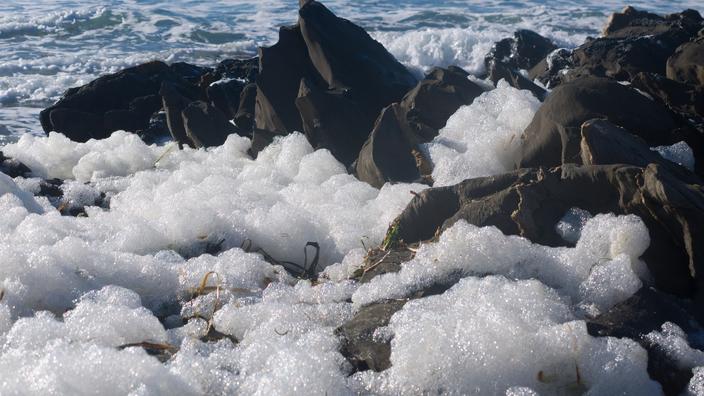
| Accumulation of foam produced by toxic algae among the rocks at Penneshaw, Kangaroo Island, threatening the ecosystem of Australia's southern region. (Photo: lefigaro.fr) |
Australia's southern coast is grappling with a severe natural disaster as an unprecedented bloom of toxic algae, Karenia mikimotoi, ravages marine ecosystems and cripples the tourism and fishing industries. Since March, the proliferation of this microalgae has escalated dramatically, reaching record levels in July and blanketing over 4,400 square kilometers off the coast of Adelaide.
The devastating impact is evident in the staggering death toll of over 13,850 marine animals, including a wide array of fish, crustaceans, octopuses, crabs, rays, and sharks. The algae release potent toxins and deplete oxygen in the water during decomposition, leading to the widespread asphyxiation of marine life. Popular tourist destinations like the Yorke and Fleurieu peninsulas and Kangaroo Island are now marred by beaches strewn with animal carcasses.
This ecological catastrophe has far-reaching economic consequences. The fishing industry, particularly oyster and mussel farms, has been forced to halt production, resulting in significant losses. Tourism, a vital part of the regional economy, has also experienced a sharp decline as visitors are deterred by the environmental devastation. Regional Prime Minister Peter Malinauskas has officially declared the situation a "natural catastrophe."
Scientists point to an unprecedented marine heatwave, with ocean temperatures soaring 2.5°C above seasonal averages, as a primary driver of this phenomenon, exacerbated by ongoing climate change.
In response, the federal government has committed 14 million Australian dollars (approximately 8 million euros) towards cleanup efforts and financial support for affected fishermen. State authorities have pledged an equivalent amount to fund scientific research aimed at understanding and preventing future occurrences of such destructive algal blooms.
This crisis underscores the urgent need for continued research into marine ecosystems and the impacts of climate change to mitigate future environmental disasters.
Source:


No comments:
Post a Comment