 |
| (Image: numerama.com) |
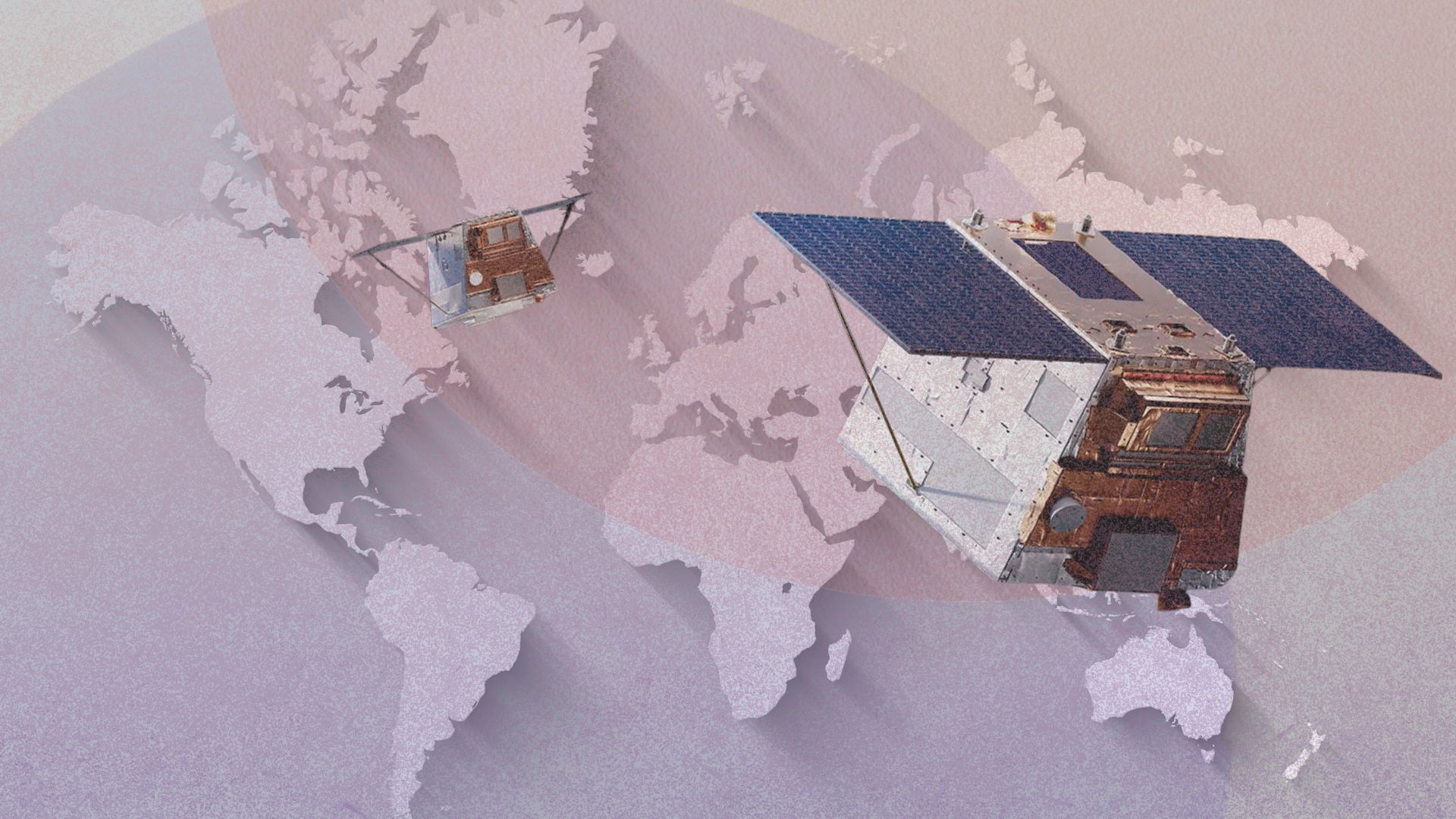
A significant space mission, VV27, is set to launch from the Guiana Space Centre on July 26, 2025, at 4:03 AM. Aboard the Vega C rocket, alongside the MicroCarb satellite for environmental monitoring, will be a unique constellation of mini-satellites called CO3D, short for "Constellation Optique en 3D" (Optical Constellation in 3D). This project is generating considerable interest, particularly from the French army.
Unlike the highly strategic CSO (Optical Space Component) constellation, whose recent deployment involved Rafale combat aircraft protection, CO3D's mission holds a different but equally vital appeal for the French military due to its "dual-use applications" — meaning it serves both civilian and military purposes.
Mapping the World in 3D
Developed by Airbus Defence & Space, the CO3D constellation comprises four satellites designed to create detailed 3D maps of the Earth's surface. These satellites will be placed in a polar orbit, flying at a low altitude of 502 km to ensure the highest possible quality 3D images over their six-year mission.
The French space agency (CNES) states that CO3D will achieve an impressive resolution of 50 cm for images and an altimetric precision of up to one meter for 3D elements. Annually, these Digital Surface Models (DSM) will cover approximately 40 million square kilometers, encompassing nearly all emerged land between latitudes -60° and +70°.
The CNES anticipates that the entire globe will be covered within five years, with specific areas of interest for glaciologists, snow scientists, and geologists being re-modeled at intervals of a few months. Beyond defense, various civilian sectors, from startups to large corporations, will also benefit from and commercialize the data provided by CO3D.
Source:


No comments:
Post a Comment