🌊 Early Human Relatives Reached Sulawesi Over a Million Years Ago
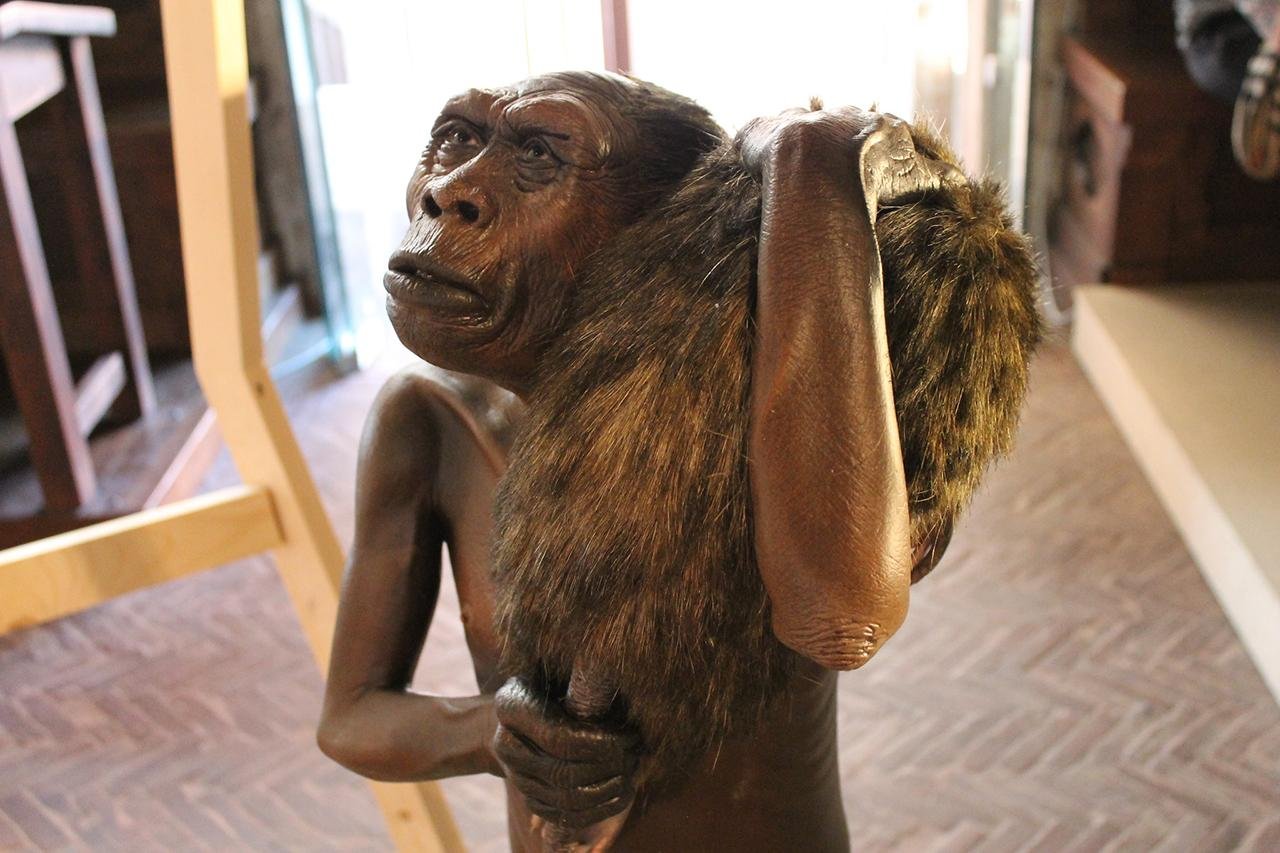 |
| A reconstruction of Homo floresiensis. Credit: Paolo C / CC BY-NC-SA 2.0 |
A groundbreaking discovery on the Indonesian island of Sulawesi has rewritten the timeline of human migration in Southeast Asia. Archaeologists have unearthed stone tools that suggest early human relatives—possibly Homo erectus or even the enigmatic Homo floresiensis—arrived on the island over a million years ago, making a daring oceanic journey long before modern humans existed.
🛠️ The Discovery That Changed Everything
Between 2019 and 2022, researchers from Griffith University (Australia) and Indonesia’s National Research and Innovation Agency (BRIN) excavated seven stone flakes at the Calio site in southern Sulawesi. These tools, made from chert and shaped using percussion flaking techniques, show signs of retouching—indicating they were used for cutting or crafting.
What’s astonishing is their age: dating methods including paleomagnetic analysis and uranium-series testing of a fossilized pig molar revealed the tools are between 1.04 and 1.48 million years old.
🌍 Crossing the Wallace Line
This find marks the oldest known hominin presence in Wallacea—a region of island chains between Asia and Australia. It predates similar discoveries in the Philippines and even Sulawesi’s own Talepu site. The implications are huge: early humans crossed deep-sea channels to reach Sulawesi, challenging long-held beliefs about their mobility and seafaring capabilities.
Professor Adam Brumm, co-leader of the study, emphasized the significance: “It’s a major piece of the puzzle, but we still don’t know who these toolmakers were. No hominin fossils have been found at Calio yet.”
🧬 Who Were They?
The researchers speculate that the tools may have been crafted by Homo erectus, known to have reached nearby Java around 1.6 million years ago. Alternatively, they could belong to a close relative like Homo floresiensis—the so-called “hobbit” species discovered on the neighboring island of Flores.
Brumm even suggests that Flores hominins might have originated from Sulawesi before migrating south.
🌿 Evolution on an Isolated Island
Sulawesi’s vast and diverse landscape raises fascinating questions. If hominins were isolated there for over a million years, did they evolve in unique ways, like the small-bodied Homo floresiensis? Or did entirely different evolutionary paths unfold?
The island is already famous for its ancient cave art, dated to over 51,000 years ago. But this new evidence pushes human history on Sulawesi back much further—into a time when early humans were already mastering the seas.
📚 Want to dive deeper? Check out the original article on Archaeology News Online Magazine.

Comments
Post a Comment