 |
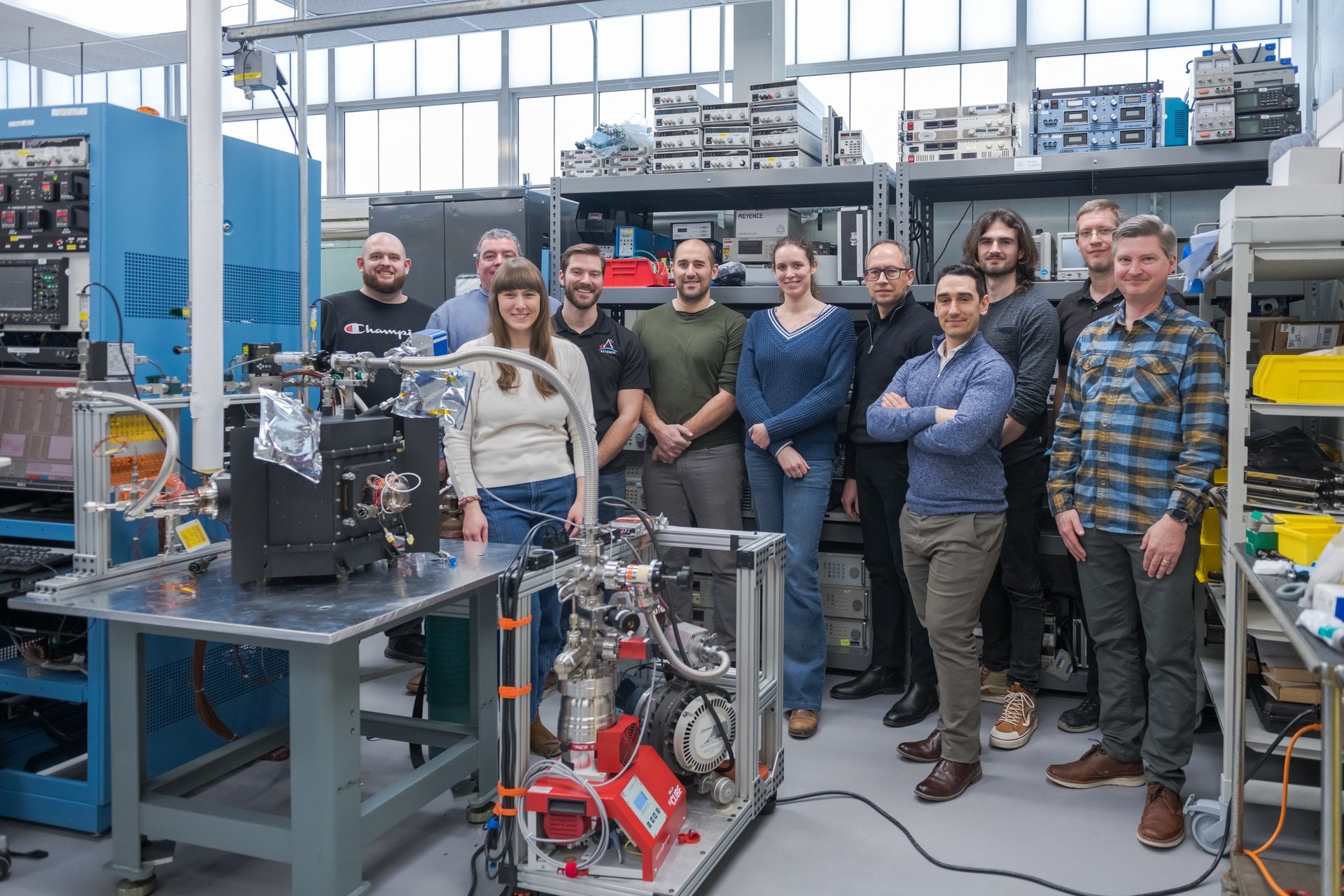
| NASA Glenn Research Center’s Thermal Energy Conversion Branch team and the University of Leicester’s Space Nuclear Power team pose for a photo at the center in Cleveland following a successful test in January 2025. Credit: NASA/Jef Janis |
A groundbreaking collaboration between NASA and the University of Leicester is paving the way for future deep-space missions, including those to Mars, with the development of a new nuclear fuel source. This research focuses on Americium-241 as a potential alternative to the increasingly scarce plutonium-238, which has traditionally fueled Radioisotope Power Systems (RPS).
For over 15 years, researchers at the University of Leicester have been at the forefront of Americium-RPS development. Their recent partnership with NASA scientists involved evaluating a Stirling generator testbed powered by Americium-241 simulators. These successful tests demonstrated that an Americium-fueled RPS could serve as a robust and viable power source for extended spaceflight missions. Notably, the system proved capable of maintaining power even in the event of a Stirling convertor failure.
The rapid and cost-effective development of this prototype is largely attributed to the strong collaboration between NASA's Glenn Research Center and the University of Leicester. Following these promising results, the NASA Glenn team is now focused on creating a lighter, more accurate version of the testbed for further environmental testing. It's worth noting that China is also actively pursuing similar nuclear power systems to support its own ambitious space exploration endeavors.
This innovative research into Americium-241 holds significant promise for overcoming the limitations of current fuel supplies and could be instrumental in enabling humanity's continued exploration of the solar system.
Learn more about this development:


No comments:
Post a Comment