 |
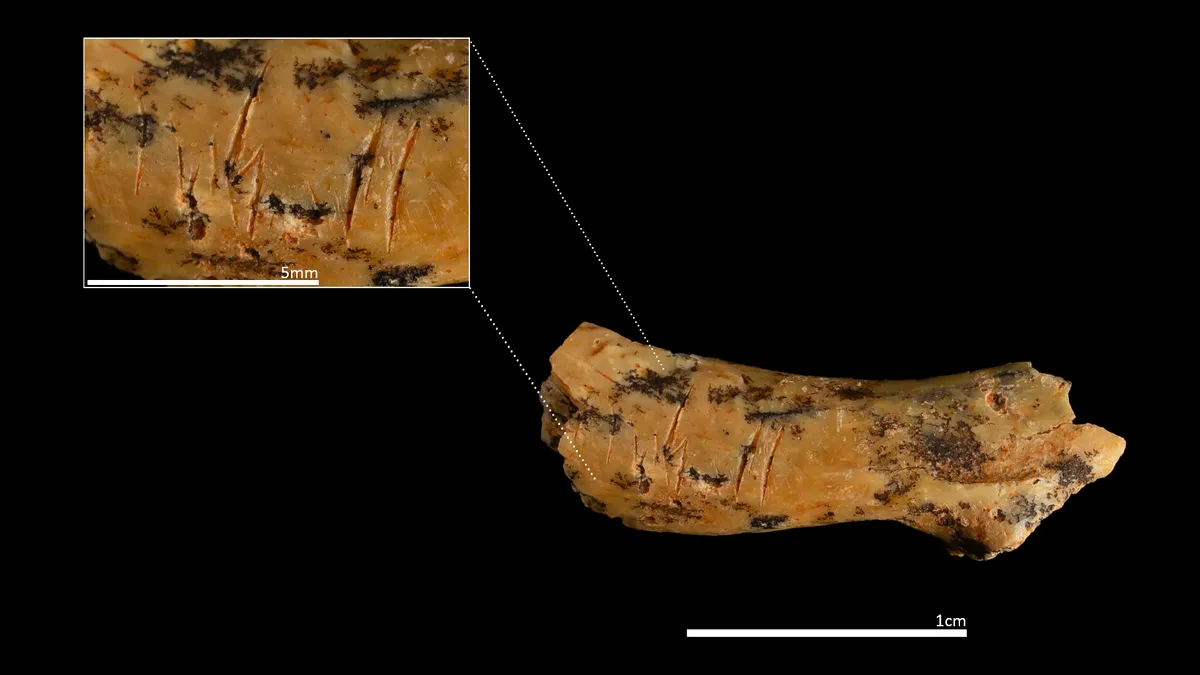
| Detail of the neck vertebra of a child aged between 2 and 5 years, with cut marks evidencing cannibalistic practices by other humans. (Image credit: Maria D. Guillén / IPHES-CERCA) |
Atapuerca, Spain - Startling evidence from an 850,000-year-old neck bone suggests that an ancient human relative, Homo antecessor, engaged in the cannibalism of toddlers. Discovered at the Gran Dolina cave in Atapuerca, northern Spain, the cervical vertebra of a child aged between 2 and 5 years old bears precise cut marks, indicating the child was processed and consumed like any other prey.
Palmira Saladié, co-director of the Gran Dolina excavation, highlighted the significance of the find, stating, "This case is particularly striking, not only because of the child's age, but also due to the precision of the cut marks." The extraordinary preservation of the fossil surfaces allowed researchers to identify not only cut marks but also human bite marks, providing compelling evidence of cannibalistic practices.
This latest discovery is part of a set of 10 newly excavated skeletons, all belonging to Homo antecessor. Many of these bones exhibit defleshing cuts and intentional fractures consistent with the processing of animal carcasses for consumption. Homo antecessor, an archaic human species that became extinct around 770,000 years ago, is exclusively identified at the Atapuerca site. Its precise position in the human family tree remains debated, with experts pondering whether it was an ancestor to Neanderthals and modern humans or an evolutionary offshoot. Regardless, it stands as the earliest human relative found in Europe.
For over three decades, excavations at Gran Dolina have uncovered more than two dozen examples of human cannibalism, with approximately 30% of the bones found at the site showing cut marks indicative of human consumption. This ongoing evidence reinforces the theory that early humans utilized their companions as a food resource and possibly as a method of territorial control.
"What we are documenting now is the continuity of that [cannibalism] behavior," Saladié explained. "The treatment of the dead was not exceptional, but repeated."
The 10 skeletons, including the cannibalized toddler, were found in a geological layer dated between 850,000 and 780,000 years ago, making these remains the earliest definitive evidence of human relatives in Europe and the earliest clear example of human cannibalism to date. While earlier signs of cannibalism among human relatives in Kenya date back 1.45 million years, the evidence is less conclusive.
The Gran Dolina cave continues to be a rich source of archaeological findings, with more human remains potentially awaiting discovery that could further illuminate the enigmatic Homo antecessor. As Saladié noted, "Every year we uncover new evidence that forces us to rethink how they lived, how they died, and how the dead were treated nearly a million years ago."
For more details, you can refer to the original article from


No comments:
Post a Comment